How Marketing Teams Use AI Automation to Scale Content & Outreach
How marketing teams use AI automation to scale content creation and outreach while maintaining relevance, consistency, and a strong human touch
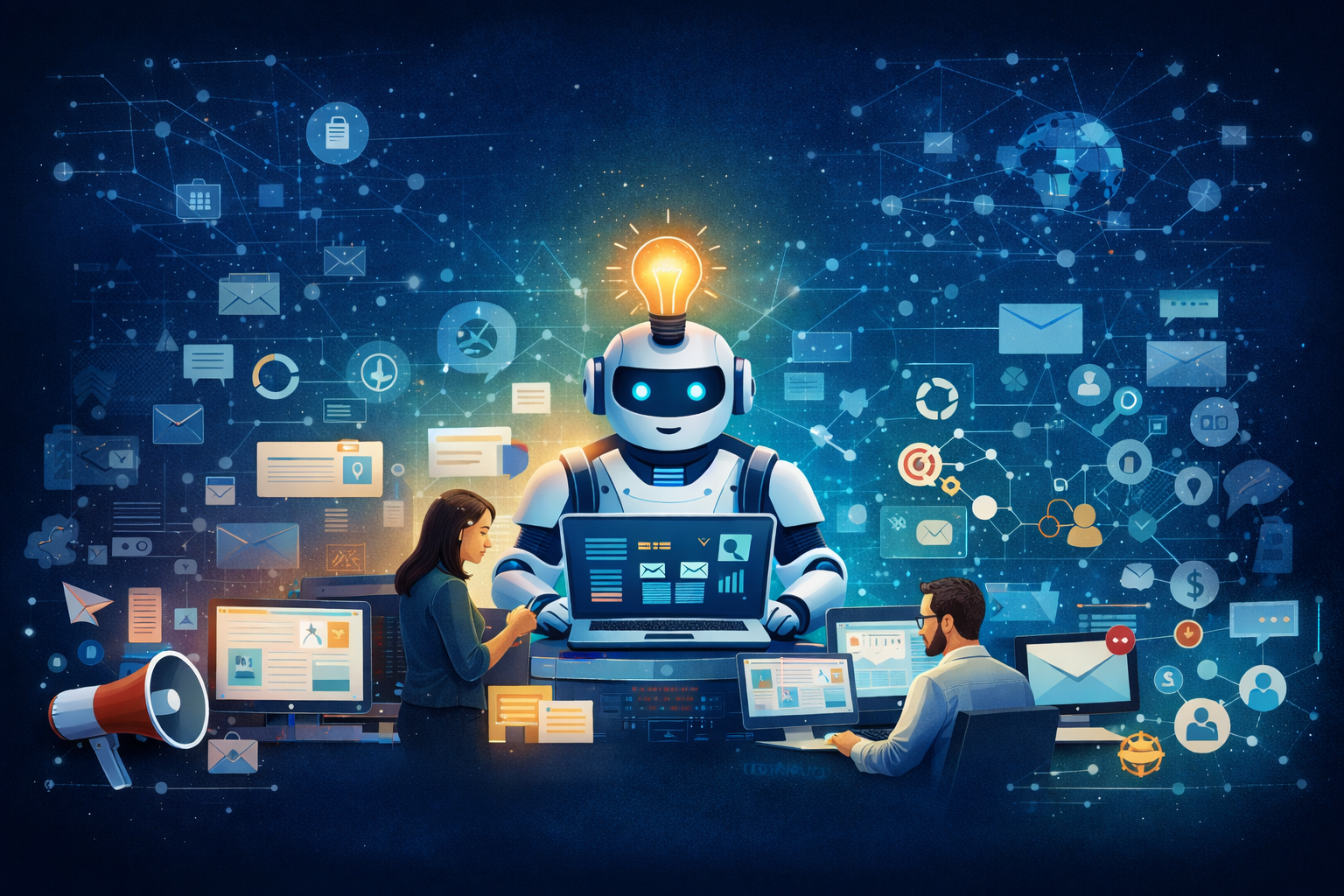
Introduction: The Marketing Scale Problem
Marketing teams today face a paradox. On one hand, expectations have never been higher. Audiences demand personalised content, faster responses, consistent brand messaging, and value-driven communication across multiple platforms. On the other hand, most marketing teams are under pressure to do more with fewer resources. Budgets are scrutinised, headcounts are limited, and competition for attention is fierce.
This challenge becomes especially clear when it comes to content and outreach. Creating high-quality content takes time. Research, ideation, writing, editing, publishing, and distribution are labour-intensive processes. Outreach, whether via email, LinkedIn, or other channels, requires careful targeting, follow-ups, relationship management, and constant optimisation.
This is where AI automation has begun to change the marketing landscape.
AI automation is not about replacing marketers. Instead, it is about removing bottlenecks, reducing manual work, and allowing teams to scale intelligently without burning out or compromising quality. Marketing teams that understand how to use AI strategically are not just working faster; they are working smarter, more consistently, and more effectively.
This article explores how marketing teams use AI automation to scale content creation and outreach, the tools and systems involved, real-world use cases, ethical considerations, and how businesses can implement AI without losing authenticity.
Understanding AI Automation in Marketing
Before diving into applications, it is important to clarify what AI automation actually means in a marketing context.
AI automation refers to the use of artificial intelligence systems combined with automated workflows to perform repetitive, data-driven, or time-consuming marketing tasks. Unlike traditional automation, which follows rigid rules, AI-powered systems can analyse data, learn patterns, and adapt over time.
In marketing, AI automation often combines:
- Machine learning algorithms
- Natural language processing
- Predictive analytics
- Workflow automation tools
- Integration platforms such as CRMs and marketing automation software
This combination enables marketing teams to automate tasks such as content ideation, copy drafting, audience segmentation, lead scoring, outreach sequencing, performance analysis, and optimisation.
Crucially, AI automation works best when paired with human oversight. The most successful teams treat AI as a collaborator rather than a replacement.
Why Marketing Teams Are Turning to AI Automation
The Pressure to Produce More Content
Modern marketing is undeniably content-driven. Blogs, social media posts, newsletters, landing pages, video scripts, advertisements, and case studies are no longer optional add-ons to a marketing strategy; they are fundamental building blocks. Audiences today are exposed to thousands of marketing messages daily, which has raised their expectations significantly. They expect brands to communicate clearly, consistently, and with genuine value across every channel they engage with. For marketing teams, this creates an ongoing challenge: how to produce a high volume of quality content without sacrificing accuracy, creativity, or brand voice.
This is where AI automation has become increasingly valuable. One of its most immediate benefits is the ability to generate content drafts at speed. AI tools can produce initial versions of blog posts, email copy, social media captions, or video scripts in a fraction of the time it would take a human writer to start from scratch. This does not mean the content is finished or ready to publish, but it provides a strong foundation. Marketers can then focus their efforts on refining ideas, adding insight, and aligning the message with campaign objectives, rather than spending hours facing a blank page.
AI automation also makes content repurposing far more efficient. A single long-form blog post can be transformed into multiple assets, such as LinkedIn posts, newsletter sections, short social captions, or talking points for videos. Instead of manually rewriting content for each platform, AI can quickly adapt the core message to suit different formats and audiences. This allows marketing teams to maximise the value of each piece of content while maintaining consistency across channels.
Maintaining a consistent tone and message is another area where AI adds value. When guided by clear brand guidelines, AI tools can help ensure that content across platforms follows the same voice, terminology, and positioning. This is particularly useful for growing teams or businesses working with multiple contributors, where inconsistencies can easily arise.
Finally, AI automation significantly reduces the time spent on repetitive writing tasks. Routine updates, standard emails, variations of ad copy, and basic content edits can all be handled more efficiently. As a result, marketing professionals can dedicate more time to strategic thinking, creative development, and audience engagement, which ultimately leads to stronger and more impactful marketing outcomes.
The Need for Personalised Outreach at Scale
Generic outreach no longer delivers results in today’s competitive marketing environment. Whether through B2B email campaigns or LinkedIn prospecting, audiences have become highly selective about the messages they engage with. Decision-makers are busy, inboxes are crowded, and irrelevant messages are quickly ignored or deleted. As a result, outreach must feel timely, personalised, and genuinely useful in order to capture attention and build trust.
AI automation enables marketing teams to personalise outreach at scale without dramatically increasing workload. One of its key strengths lies in analysing audience data. AI systems can process large volumes of information, including demographic details, job roles, browsing behaviour, engagement history, and past interactions. By identifying patterns and intent signals, AI helps marketers understand who their audience is and what they are most likely to respond to at any given moment.
Based on this insight, AI automation allows teams to customise messaging according to behaviour and intent. Instead of sending the same message to every prospect, outreach can be tailored to reflect a recipient’s industry, challenges, or stage in the buyer journey. For example, someone who has recently downloaded a guide may receive educational follow-up content, while a highly engaged lead may receive a more direct sales message. This level of relevance significantly improves open rates, response rates, and overall campaign performance.
AI also plays a crucial role in automating follow-ups while maintaining relevance. Consistent follow-up is essential but often neglected due to time constraints. AI automation ensures that follow-up messages are sent at the right time, with adjusted messaging based on previous engagement, without sounding repetitive or impersonal.
This approach is particularly valuable for marketing teams facing limited resources and growing expectations. Many teams operate with small headcounts yet are expected to deliver results comparable to much larger organisations. AI automation acts as a force multiplier, enabling teams to scale outreach efforts, maintain quality, and meet performance goals without adding significant operational strain.
How AI Automation Scales Content Creation
AI-Assisted Content Ideation
One of the biggest challenges in content marketing is deciding what to write about. Even experienced marketing teams can struggle to identify topics that will resonate with their audience, rank well in search engines, and support wider business goals. Relying purely on intuition or past performance often leads to inconsistent results and missed opportunities.
AI tools address this challenge by analysing large volumes of data from multiple sources, including search trends, competitor content, audience behaviour, and keyword performance. By processing this information at speed, AI can highlight patterns that would be difficult and time-consuming for humans to identify manually. As a result, marketing teams gain clearer insight into what their audience is actively searching for and where demand exists.
In practice, marketing teams use AI to identify content gaps where competitors are ranking but their own brand is absent, or where audience questions are not being fully addressed. AI also supports the creation of topic clusters, grouping related themes around core subjects to improve content structure and search visibility. In addition, predictive capabilities help teams estimate which topics are likely to perform well based on historical data and emerging trends.
Crucially, AI helps align content ideas with buyer intent. Instead of producing content for the sake of volume, teams can prioritise topics that support different stages of the customer journey. This removes guesswork from content planning and ensures strategy is driven by data rather than instinct alone.
Drafting and Structuring Content
AI writing assistants can generate first drafts, outlines, headlines, and introductions. While these drafts usually require human editing, they dramatically reduce the time spent starting from scratch.
Marketing teams often use AI to:
- Create blog outlines
- Draft social media captions
- Write email copy variations
- Generate landing page sections
The key benefit is speed. Writers can focus on refining ideas, improving clarity, and adding brand voice instead of struggling with blank pages.
Scaling Content Repurposing
One high-performing blog post can be transformed into multiple assets. AI automation makes repurposing systematic and efficient.
A single long-form article can be automatically converted into:
- LinkedIn posts
- Email newsletter segments
- Short-form social captions
- Webinar talking points
- Video scripts
This approach maximises return on content investment while maintaining consistency across channels.
Maintaining Brand Voice with AI-Generated Content
One of the biggest concerns marketing teams have about AI content is the fear of sounding generic or robotic. This concern is valid, but it is not inevitable.
AI tools can be trained or guided using:
- Brand voice guidelines
- Approved vocabulary and tone rules
- Examples of past content
- Clear editorial instructions
When used correctly, AI automation actually improves consistency. Instead of multiple writers interpreting brand voice differently, AI ensures alignment across teams and channels.
Human editors remain essential. They provide nuance, cultural context, emotional intelligence, and strategic judgment that AI cannot fully replicate.
AI Automation in Content Distribution
Creating content is only half the battle. Distribution determines impact.
AI automation helps marketing teams distribute content more effectively by:
- Scheduling posts at optimal times
- Selecting the best channels for specific content
- Automatically tagging and categorising content
- Tracking performance across platforms
Advanced systems can even adjust distribution strategies in real time based on engagement data.
How AI Automation Transforms Outreach
Smarter Audience Segmentation
Effective outreach starts with understanding the audience. AI tools analyse large datasets to segment audiences based on behaviour, demographics, interests, and intent signals.
Marketing teams use AI to:
- Identify high-value prospects
- Group audiences dynamically
- Update segments in real time
- Prioritise leads most likely to convert
This ensures outreach efforts are focused where they matter most.
Personalised Email Campaigns at Scale
AI automation enables marketing teams to personalise emails beyond just adding a first name. Messages can be tailored based on:
- Industry
- Job role
- Past interactions
- Website behaviour
- Engagement history
AI can also test subject lines, messaging styles, and send times automatically, optimising campaigns continuously.
LinkedIn and Social Outreach Automation
Social platforms, particularly LinkedIn, have become essential channels for B2B outreach and relationship building. For many businesses, LinkedIn is no longer just a networking site but a key driver of leads, partnerships, and brand credibility. However, managing consistent and personalised outreach on the platform can be time-consuming, especially for marketing teams working at scale.
AI automation helps teams manage LinkedIn outreach efficiently without sounding spammy or impersonal. One common use case is personalised connection requests. AI tools can tailor connection messages based on factors such as job role, industry, recent activity, or shared interests, making initial outreach feel relevant rather than generic. This significantly increases acceptance rates and sets a stronger foundation for future engagement.
AI automation also enables automated but contextual follow-ups. Instead of sending the same message to every connection, follow-ups can be adapted based on whether a prospect viewed a profile, replied, or engaged with content. Engagement tracking further supports this process by monitoring likes, comments, profile visits, and message responses, allowing teams to prioritise warm leads.
Message optimisation is another key benefit, with AI testing different wording, tones, and formats to identify what resonates best. The most effective teams balance automation with genuine human interaction, stepping in personally when conversations deepen and relationships begin to form.
Lead Nurturing and Follow-Ups
Consistent follow-up is critical, yet often neglected due to time constraints. AI automation ensures no lead falls through the cracks.
Marketing teams use AI to:
- Trigger follow-ups based on behaviour
- Adjust messaging based on engagement
- Score leads dynamically
- Hand off qualified leads to sales teams seamlessly
This creates a smoother customer journey and improves conversion rates.
AI Automation and Marketing Analytics
Data-Driven Decision Making
AI excels at analysing large volumes of data, making it particularly valuable in modern marketing environments where campaigns run across multiple channels simultaneously. Marketing teams generate vast amounts of data from websites, email campaigns, social media platforms, paid advertising, and CRM systems. Manually interpreting this information is not only time-consuming but often leads to delayed or incomplete insights.
AI analytics enables marketing teams to clearly understand what is working and what is not. Through automated performance reporting, AI can continuously track key metrics such as engagement, conversions, and return on investment, presenting insights in an accessible and actionable way. This reduces reliance on manual reporting and allows teams to focus on decision-making rather than data collection.
AI automation also supports attribution modelling by analysing how different touchpoints contribute to conversions. Instead of relying on simplistic last-click models, teams gain a more accurate picture of the customer journey. Predictive forecasting further enhances planning by using historical and real-time data to anticipate future performance, demand, and campaign outcomes.
Perhaps most importantly, AI enables ongoing campaign optimisation. By testing variations, adjusting budgets, and refining targeting in real time, AI ensures marketing efforts remain efficient and effective. Rather than waiting for monthly reports, teams gain continuous insights that inform immediate action and faster strategic adjustments.
Improving ROI Through Automation
By reducing manual work, AI automation lowers operational costs while increasing output and effectiveness. Marketing teams can:
- Launch campaigns faster
- Test more variations
- Optimise continuously
- Scale without proportional increases in budget
This makes AI automation a strategic investment rather than a tactical tool.
Ethical and Practical Considerations
Avoiding Over-Automation
Not everything should be automated. Over-automation can lead to impersonal experiences, brand damage, and reduced trust.
Marketing teams must decide:
- Where automation adds value
- Where human involvement is essential
- How to maintain authenticity
Data Privacy and Compliance
AI systems rely on data. Marketing teams must ensure compliance with regulations such as GDPR and respect user consent.
Responsible AI use builds long-term trust and protects brand reputation.
How Marketing Teams Can Implement AI Automation Successfully
Start with Clear Objectives
Successful AI implementation begins with clear goals. Whether it is increasing content output, improving outreach response rates, or reducing manual workload, objectives guide tool selection and workflow design.
Integrate, Do Not Isolate
AI works best when integrated into existing systems such as CRMs, email platforms, and content management systems. Fragmented tools reduce efficiency and increase complexity.
Train Teams, Not Just Tools
AI adoption is as much a people challenge as a technical one. Marketing teams must be trained to work alongside AI, understand its limitations, and use it strategically.
The Future of AI Automation in Marketing
AI automation will continue to evolve. Future developments are likely to include:
- More advanced personalisation
- Autonomous campaign optimisation
- Deeper integration across customer journeys
- Greater emphasis on ethical AI practices
Marketing teams that build AI capabilities today will be better positioned to adapt tomorrow.
Conclusion: Scaling Without Losing the Human Touch
AI automation has fundamentally changed how marketing teams scale content and outreach. It enables faster execution, smarter decision-making, and more personalised communication at scale. However, its true power lies not in replacing marketers, but in empowering them.
The most successful marketing teams use AI automation to handle the repetitive, data-heavy tasks, freeing humans to focus on creativity, strategy, and relationship-building. When implemented thoughtfully, AI becomes a competitive advantage that supports sustainable growth.
For businesses looking to scale without sacrificing quality or authenticity, AI automation is no longer optional. It is a strategic necessity.