How Product Design Decisions Affect Long-Term Maintenance
How early product design choices impact long-term maintenance, cost, and product sustainability.
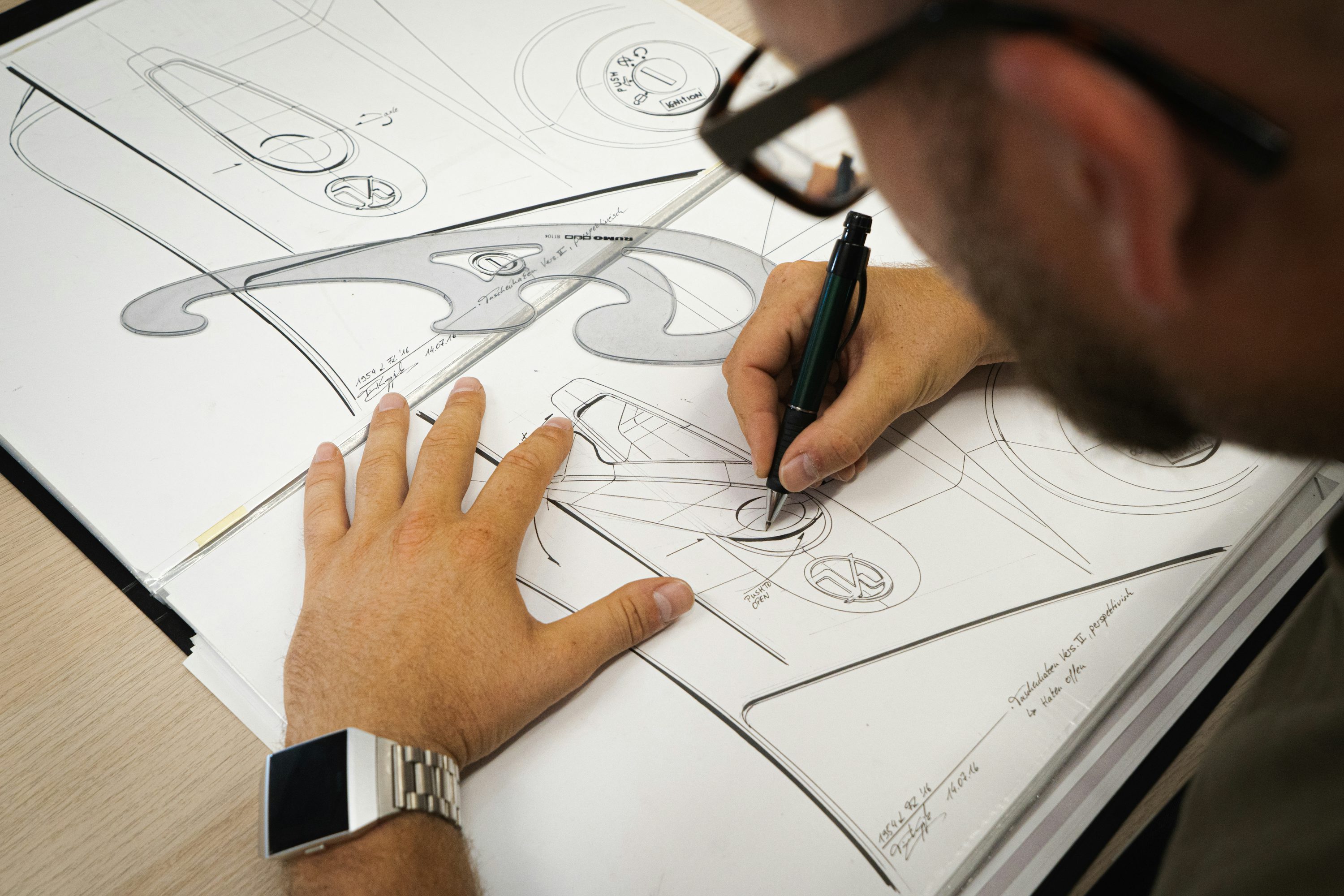
Product design is most often judged by what happens at launch. Does the product look good? Is it intuitive? Does it solve the immediate problem? Can it ship on time? These questions dominate early discussions, deadlines, and trade-offs. Maintenance, by contrast, rarely has a seat at the table. It is treated as a future concern, something to “deal with later” once the product proves itself.
This mindset is one of the most expensive mistakes product teams make.
In reality, long-term maintenance is not a consequence of how a product is built later — it is a consequence of how it is designed at the beginning. The decisions made during discovery, product definition, and early design quietly determine whether a product will be flexible or fragile, evolvable or brittle, calm to maintain or permanently exhausting.
Maintenance is not a technical failure. It is a design outcome.
This article explores how product design decisions affect long-term maintenance, why so many products become difficult to sustain after a few years, and how teams can design products that survive real-world use, organisational change, and time itself.
Maintenance Is Not a Phase — It Is the Product’s Natural State
A product’s life is often imagined as a sequence: design, build, launch, then “maintenance”. This framing is misleading. For most products, the maintenance phase is not a short tail at the end of development — it is the longest and most defining period of the product’s existence.
A product may spend:
- 3–6 months in design
- 6–12 months in initial development
- 5–10 years (or more) in maintenance, iteration, and adaptation
During those years, teams must:
- Fix defects and edge cases
- Respond to user behaviour that does not match assumptions
- Adapt to new regulations, markets, or business models
- Integrate with new systems
- Onboard new team members
- Retire or replace parts of the system
- Keep the product stable while everything around it changes
When maintenance is difficult, every one of these activities becomes slower, riskier, and more expensive. When maintenance is manageable, products can evolve steadily without drama.
The difference is rarely caused by the quality of code alone. It is overwhelmingly driven by design decisions made before the first line of code was written.
Why Maintenance Problems Are Usually Invisible at Launch
One reason maintenance is undervalued is that its consequences are delayed. Poor design decisions rarely cause immediate failure. Instead, they introduce latent complexity — problems that only surface when the product is stressed by growth, change, or time.
At launch:
- Edge cases are rare
- User behaviour is limited
- Integrations are minimal
- Team knowledge is fresh
- The system has not yet been modified repeatedly
Under these conditions, even fragile designs can appear to work well. It is only after months or years of incremental change that weaknesses emerge. By then, reversing early design decisions is costly and disruptive.
This delayed feedback loop leads teams to overestimate the success of early design choices and underestimate their long-term cost.
Design Decisions Create the Shape of Maintenance
Product design is not just about interfaces and flows. It defines:
- What concepts exist in the system
- How responsibilities are divided
- What assumptions are embedded
- What is easy to change and what is not
These decisions shape maintenance in several critical ways.
1. They determine how change propagates
Some designs localise change. Others cause small updates to ripple unpredictably across the system.
2. They influence how understandable the system remains
Design choices affect whether future team members can reason about behaviour or must rely on tribal knowledge.
3. They define how much “hidden work” exists
Products often contain invisible complexity that only maintainers encounter: special cases, exceptions, undocumented behaviour.
When design lacks clarity, maintenance becomes an exercise in risk management rather than improvement.
Complexity: The True Cost Driver of Maintenance
Of all factors affecting long-term maintenance, complexity is the most decisive. Not performance. Not scale. Not even technology choice. Complexity.
Complexity enters products gradually, often through reasonable decisions:
- Supporting multiple user types in one flow
- Adding configuration to satisfy different customers
- Allowing exceptions to standard processes
- Providing “flexibility” without constraints
Each decision adds surface area. Each new option adds states the system can be in. Each exception weakens predictability.
Over time, complexity compounds.
A complex product:
- Takes longer to understand
- Requires more testing
- Breaks in unexpected ways
- Discourages refactoring
- Creates fear around change
A simple product, by contrast, may feel restrictive early on, but it is far easier to maintain because its behaviour is legible.
Feature Design and the Slow Accumulation of Maintenance Debt
Feature design is one of the most direct ways design choices translate into long-term maintenance cost.
Feature Creep Is Rarely Intentional
Feature creep does not usually result from poor judgement. It emerges from a series of small, understandable decisions:
- “This customer needs one extra option”
- “We should support this edge case”
- “Let’s not say no — we can make it configurable”
Each addition is justified in isolation. Together, they produce a product that is difficult to reason about.
Maintenance debt builds when:
- Features overlap in responsibility
- Behaviour varies slightly across similar features
- Old features are never retired
- New features must accommodate legacy assumptions
Over time, the product becomes a negotiation between past decisions rather than a coherent system.
Designing for Screens vs Designing for Work
A common source of long-term maintenance problems is designing products around screens instead of work.
Screen-centred design focuses on:
- Page layouts
- Navigation structure
- Visual hierarchy
Work-centred design focuses on:
- What users are trying to accomplish
- The sequence of actions
- Where decisions are made
- Where errors occur
- What information is needed at each step
When products are designed around screens, logic often becomes fragmented. Behaviour is distributed across views rather than aligned with workflows. This makes maintenance difficult because:
- Changes affect multiple areas
- Business logic is scattered
- Exceptions are hard to track
Designing around work creates clearer boundaries. When workflows are explicit, maintenance changes tend to be contained and predictable.
Consistency Is a Maintenance Strategy, Not Just a UX Principle
Consistency is often discussed in terms of user familiarity, but its impact on maintenance is even more significant.
Inconsistent design introduces:
- Multiple ways to do the same thing
- Slightly different interpretations of similar concepts
- Duplicate logic implemented in different places
This creates long-term problems:
- Bugs fixed in one place but not another
- Confusion during debugging
- Increased onboarding time for new developers
- Higher regression risk
Consistent patterns reduce the cognitive load on maintainers. They allow teams to apply fixes confidently and understand behaviour without rediscovering rules each time.
Design systems, when applied with discipline, act as maintenance infrastructure, not just visual guidelines.
Data Design: Decisions That Are Hard to Undo
Data design decisions are among the most consequential — and the hardest to reverse.
Early choices about:
- Entities and relationships
- Field meanings
- Validation rules
- Permissions and access levels
shape how the system evolves.
Poor data design leads to:
- Overloaded fields with multiple meanings
- Workarounds that bypass rules
- Fragile migrations
- Inconsistent behaviour across features
Once data is in production, changing its structure becomes expensive and risky. Design clarity at the data level dramatically reduces long-term maintenance burden.
Edge Cases and the Cost of Over-Designing
Every product has edge cases. The challenge is deciding how much influence they should have on core design.
When edge cases dominate early design:
- Core workflows become cluttered
- Logic becomes tangled
- Maintenance effort increases exponentially
A sustainable approach is:
- Design for common behaviour first
- Handle edge cases explicitly and visibly
- Avoid embedding exception logic everywhere
Edge cases should be managed, not allowed to define the system.
UX Decisions That Quietly Increase Maintenance
User experience choices often carry hidden maintenance costs.
For example:
- Highly dynamic interfaces increase state complexity
- Personalisation multiplies test scenarios
- “Smart” automation obscures logic and intent
Simple, explicit interactions are often easier to maintain because:
- Behaviour is predictable
- Errors are easier to diagnose
- Changes have fewer side effects
Good UX for maintenance prioritises clarity over cleverness.
Predictability Beats Cleverness Over Time
Clever design can impress stakeholders and demos, but it often ages poorly.
Predictable design:
- Makes behaviour easier to reason about
- Reduces debugging time
- Helps new team members onboard
- Enables safer change
In long-lived products, predictability is a competitive advantage. It reduces friction not just for users, but for the teams responsible for keeping the product alive.
Design Shortcuts Become Maintenance Obligations
Shortcuts taken during design are not neutral. They become obligations future teams must carry.
Common shortcuts include:
- Hardcoded assumptions
- Ignored error states
- Simplified permission models
- Overloaded interfaces
These decisions often reappear later as:
- Bugs that are hard to fix cleanly
- Features that cannot evolve
- Workarounds that accumulate
Speed achieved through design shortcuts is rarely real speed. It is deferred cost.
Designing for Change Instead of Perfection
Products exist in changing environments. Regulations evolve. Organisations restructure. Markets shift. Users behave differently than expected.
Designing for change means:
- Identifying which assumptions are likely to break
- Isolating volatile areas
- Avoiding irreversible decisions
This does not mean designing everything to be flexible. It means choosing where rigidity is safe and where adaptability is essential.
Modularity as a Design Choice
Modularity is often discussed as a technical concern, but it begins with design.
Modular design:
- Separates concerns clearly
- Limits the blast radius of change
- Makes parts of the system replaceable
Design decisions that support modularity include:
- Clear ownership of responsibilities
- Defined interfaces between components
- Avoiding implicit coupling
Products that lack modularity become progressively harder to maintain as change accumulates.
Navigation Reflects Structural Health
Navigation is a visible expression of a product’s structure. Poor navigation often indicates deeper design problems.
When navigation is unclear:
- Functionality is duplicated
- Dependencies are hidden
- Maintenance becomes harder because structure is opaque
Clear navigation helps maintainers understand how parts of the product relate to each other, reducing accidental breakage.
Design Decisions and Testing Burden
Maintenance effort is closely linked to testing effort.
Designs that:
- Create many states
- Depend heavily on context
- Hide logic behind automation
require extensive testing to maintain confidence.
Designing for testability means:
- Making logic explicit
- Reducing unnecessary variability
- Avoiding hidden dependencies
Testable systems are maintainable systems.
Product Design Across 5–10 Year Lifecycles
Most products are not designed with a 5–10 year lifespan in mind, even though many end up living that long. Early design discussions are dominated by immediate constraints: deadlines, budgets, competitive pressure, and stakeholder expectations. Long-term evolution is acknowledged in theory, but rarely explored in depth.
Over a multi-year lifecycle, however, products are exposed to forces that early design rarely anticipates:
- Organisational restructuring
- New leadership and strategy shifts
- Market expansion into new regions
- Regulatory changes
- Mergers and acquisitions
- Technology platform changes
- Team turnover
Design decisions that assume stability struggle under these conditions. Assumptions that once felt reasonable — about users, workflows, permissions, data ownership, or system boundaries — gradually erode.
Products that survive long-term are not those that predicted the future accurately. They are the ones designed with structural humility: an understanding that change is inevitable, and that the product must accommodate it without collapsing under its own complexity.
How Early Assumptions Become Long-Term Maintenance Traps
Every product embeds assumptions. The danger lies not in making assumptions, but in making them invisible or irreversible.
Common assumptions that age poorly include:
- “We will only ever have one type of user”
- “This workflow will remain simple”
- “Permissions can stay flat”
- “This integration will always exist”
- “This feature won’t need to change much”
When assumptions are embedded deeply into design — especially across multiple features — maintenance becomes increasingly difficult. Teams end up layering new behaviour on top of outdated assumptions rather than revisiting the original design.
Maintainable products treat assumptions as explicit and revisitable, not fixed truths.
Maintenance Debt Is Created by Design, Not Time
Maintenance debt is often discussed as something that accumulates simply because a product is old. In reality, age alone does not create maintenance problems. Design does.
Two products of the same age can have radically different maintenance profiles. One may be stable, predictable, and easy to extend. The other may be fragile, unpredictable, and resistant to change.
The difference usually comes down to:
- How clearly responsibilities were defined
- Whether complexity was constrained or allowed to sprawl
- How disciplined feature growth was
- Whether consistency was enforced
- How data and workflows were modelled
Time exposes design weaknesses — it does not create them.
The Role of Product Design in Team Turnover
One of the most underestimated maintenance factors is team turnover.
Over a 5–10 year period, most products will be touched by multiple generations of designers, developers, product managers, and stakeholders. Institutional knowledge fades. Original intent is forgotten. Context is lost.
Design decisions directly affect how resilient a product is to this reality.
Poorly designed products rely on:
- Tribal knowledge
- “Everyone knows how this works”
- Unwritten rules
- Informal conventions
Well-designed products:
- Encode intent in structure
- Use consistent patterns
- Make behaviour legible
- Reduce the need for explanation
When new team members join, maintainable products teach themselves. Fragile products require archaeology.
Designing for Handover, Not Just Use
Product design often focuses on end users, but maintainers are also users — and often the most frequent ones.
Designing for handover means:
- Clear conceptual models
- Predictable behaviour
- Minimal hidden logic
- Coherent navigation and structure
Products that are easy to hand over are easier to maintain because they reduce dependency on specific individuals. This is especially critical in growing organisations or distributed teams.
Design that depends on memory rather than structure does not scale.
Maintenance Through the Product–Engineering–Operations Triangle
Long-term maintenance sits at the intersection of three perspectives:
- Product (what the system should do)
- Engineering (how the system works)
- Operations (how the system behaves in reality)
Design decisions affect all three.
From a product perspective
Design choices determine how easily new requirements can be incorporated without rewriting existing behaviour.
From an engineering perspective
Design determines whether logic is understandable, testable, and modular — or tangled and brittle.
From an operations perspective
Design affects observability, error handling, and the ability to diagnose and resolve issues quickly.
When design optimises for only one perspective, maintenance suffers. Sustainable products align all three.
Designing for Failure, Not Just Success
Many products are designed primarily around success paths. Maintenance becomes difficult when failure paths are unclear or inconsistent.
Design decisions should explicitly address:
- What happens when data is missing
- What happens when integrations fail
- What happens when users make mistakes
- What happens when assumptions break
Failure-aware design reduces maintenance burden because issues are easier to diagnose and contain. Silent failures, ambiguous states, and inconsistent error handling create long-term instability.
Feature Removal: The Most Neglected Design Problem
Most products are excellent at adding features and terrible at removing them.
Design rarely considers:
- How a feature will be deprecated
- How users will transition away from it
- How data will be handled
- How dependencies will be untangled
As a result, products accumulate “dead features” that:
- Still require maintenance
- Still affect testing
- Still constrain design decisions
Designing for deprecation means:
- Avoiding tight coupling
- Making dependencies explicit
- Treating features as replaceable, not permanent
A product that cannot remove features safely will eventually collapse under its own weight.
Designing Constraints as a Maintenance Tool
Unlimited flexibility feels empowering early on, but it is one of the fastest ways to increase maintenance complexity.
Constraints:
- Reduce variability
- Limit states
- Simplify reasoning
- Improve predictability
Good design uses constraints deliberately. It decides where flexibility is valuable and where it is harmful.
Maintainable products are not the ones that can do everything — they are the ones that know what they will not do.
When Configuration Becomes a Maintenance Nightmare
Configuration is often introduced to avoid making design decisions. Instead of choosing a clear path, teams add options.
Over time, configuration-heavy products suffer from:
- Combinatorial complexity
- Difficult testing
- Unclear behaviour
- Increased support burden
Every configuration option multiplies the number of scenarios the system must support. Design decisions that minimise configuration and favour convention over choice significantly reduce long-term maintenance.
The Long-Term Cost of Over-Personalisation
Personalisation is attractive, but it is expensive to maintain.
Highly personalised systems:
- Require more data
- Create more states
- Increase test coverage needs
- Make behaviour harder to predict
Design that balances personalisation with standardisation is more maintainable. Not every experience needs to be unique to be effective.
Product Design and Observability
Maintenance depends on visibility. When things go wrong, teams need to understand:
- What happened
- Where it happened
- Why it happened
Design influences observability by determining:
- What states exist
- What transitions are possible
- What information is exposed
Products designed without observability in mind become opaque, forcing maintainers to guess. Design that supports clear system states and transitions makes maintenance faster and less stressful.
Why “Good UX” Sometimes Leads to Bad Maintenance
Some UX patterns prioritise user delight at the expense of system clarity:
- Hidden automation
- Implicit behaviour
- Context-sensitive actions
While these can improve short-term usability, they often make maintenance harder because behaviour becomes difficult to trace.
Designing for maintainability sometimes means choosing clarity over magic.
The Cost of Designing Without Naming Things Properly
Naming is a design decision with long-term consequences.
Poor naming:
- Obscures intent
- Causes confusion
- Leads to misuse
- Increases onboarding time
Clear naming:
- Encodes meaning
- Supports shared understanding
- Reduces documentation burden
Products with unclear naming accumulate maintenance debt because no one is quite sure what things are supposed to do.
Design Decisions That Lock Teams Into Maintenance Mode
Some design patterns trap teams in perpetual maintenance rather than improvement:
- Tight coupling between features
- Shared mutable state
- Overlapping responsibilities
- Implicit dependencies
These designs make change risky. Teams focus on stabilisation instead of progress.
Design that isolates responsibilities and clarifies boundaries allows teams to improve without fear.
When Redesign Becomes the Only Option
Redesigns are often framed as inevitable. In reality, they are usually the result of accumulated design debt.
Signs that redesign may be unavoidable include:
- Changes take longer than initial builds
- Teams are afraid to touch core functionality
- Bugs reappear after fixes
- New features require workarounds
- Knowledge exists only in people’s heads
Many redesigns could have been avoided with earlier design discipline.
Product Design as Long-Term Stewardship
Product design is not just problem-solving. It is stewardship.
Designers and product teams are making decisions on behalf of future users, future maintainers, and future organisations. Those future stakeholders cannot participate in early design discussions — but they will live with the outcomes.
Stewardship-minded design asks:
- How will this age?
- Who will maintain this?
- What will this enable or prevent?
- How hard will this be to change?
These questions are rarely urgent — but they are always important.
Sustainable Products Are Designed, Not Rescued
Maintenance is often framed as a burden to manage. In reality, it is a signal.
When maintenance is painful, it is usually because design prioritised short-term delivery over long-term coherence. When maintenance is manageable, it is because design respected complexity and constrained it intentionally.
Products that age well are not lucky. They are designed to.
Practical Design Principles for Long-Term Maintainability
Across industries and product types, maintainable products tend to follow similar principles:
- Design around workflows, not screens
- Favour simplicity over completeness
- Limit configuration and personalisation
- Enforce consistency relentlessly
- Make assumptions explicit
- Design for change, not perfection
- Build modularity into structure
- Treat feature removal as a first-class concern
- Design for people who will maintain the system
These principles do not slow progress. They protect it.
Final Thoughts: Design Is a Maintenance Decision
How product design decisions affect long-term maintenance is not a theoretical concern — it is one of the most practical realities of building digital products.
Maintenance is where products spend most of their lives. It is where costs accumulate, teams burn out, and innovation either continues or stalls. The quality of maintenance is determined long before the product is mature, by decisions made when speed feels more important than structure.
Good product design does not eliminate maintenance. It makes maintenance predictable, manageable, and sustainable.
In the long run, the most successful products are not the ones that launch fastest or look the most impressive at first. They are the ones that continue to work, adapt, and support their users year after year — without collapsing under the weight of their own complexity.
That is not an accident. It is the outcome of design done with long-term responsibility in mind.