How AI is Redefining Customer Experience for Modern Businesses
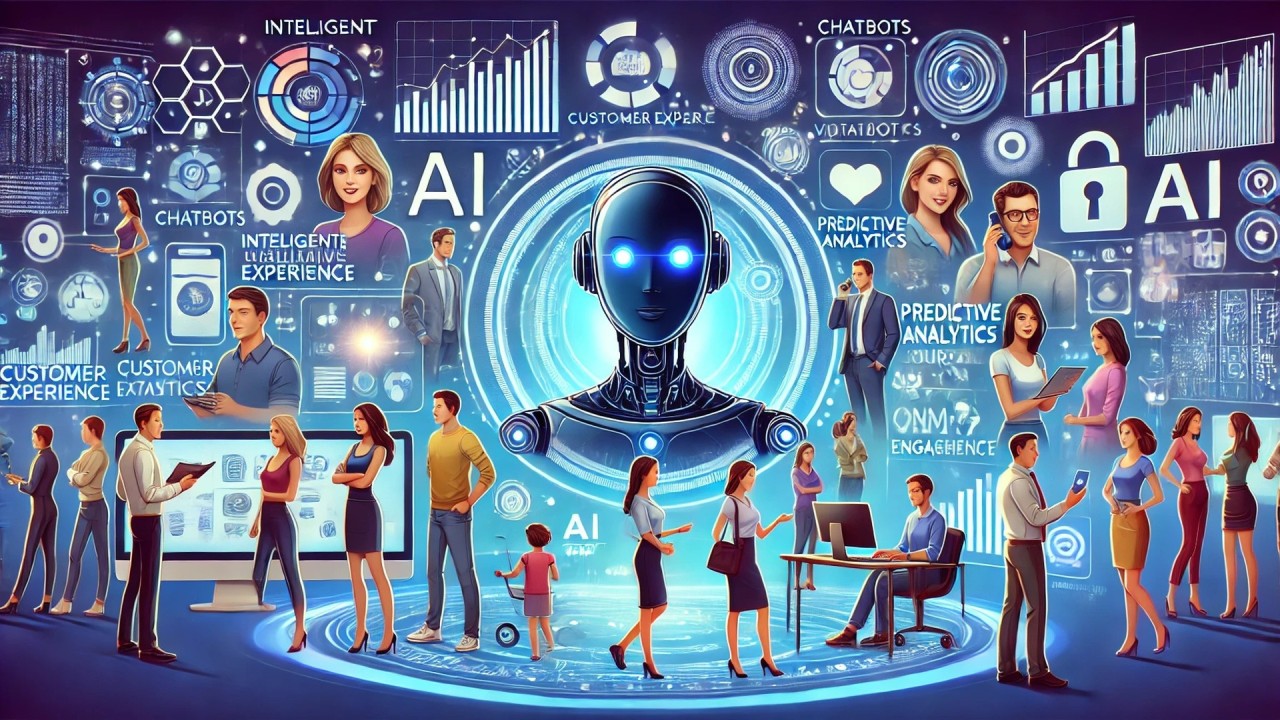
AI is transforming customer experience through personalisation, faster support, predictive insights, and seamless digital journeys.
Introduction
Customer experience (CX) has become the defining factor in business success. In today’s highly competitive digital economy, products and prices alone are no longer enough to retain customers. What truly differentiates brands is how they make customers feel at every touchpoint.
Artificial Intelligence (AI) is now at the centre of this transformation. From personalised recommendations on streaming platforms to instant chatbot support on banking apps, AI is reshaping how businesses interact with customers. It is making experiences faster, smarter, more personalised, and more predictive than ever before.
This blog explores in depth how AI is redefining customer experience, the technologies driving this change, real-world applications, benefits, challenges, and what the future holds.
1. The Evolution of Customer Experience
Traditionally, customer experience (CX) was largely reactive in nature. Businesses would only respond once a customer identified a problem or made a complaint. This meant that support systems were often slow, heavily manual, and restricted to specific working hours. As a result, customers frequently experienced delays, inconsistent service quality, and limited accessibility outside standard business operations. The overall experience depended heavily on human availability rather than system efficiency.
With the rise of digital transformation, CX entered its second phase. Businesses began adopting websites, email support systems, and social media platforms to communicate with customers more efficiently. This shift significantly improved response times and accessibility, allowing customers to reach brands through multiple channels. However, despite these improvements, the process remained largely human-driven. Most interactions still required manual input, and businesses were primarily reacting to customer needs rather than anticipating them.
Today, artificial intelligence has introduced a third and far more advanced phase: proactive and predictive customer experience. Instead of waiting for customers to raise issues, businesses can now anticipate needs and act in advance. AI enables organisations to predict customer behaviour, identify potential problems before they occur, and deliver solutions proactively.
This transformation is driven by several key capabilities. AI systems can predict customer needs before they arise by analysing historical and real-time data. They can automate responses instantly, ensuring that customers receive immediate support without delay. They also enable large-scale personalisation, tailoring experiences to individual preferences and behaviours. In addition, AI continuously analyses customer interactions in real time, allowing businesses to adapt quickly and improve service quality.
This shift is fundamental because it changes the very nature of customer experience. CX is no longer just a reactive service function focused on solving problems after they occur. Instead, it has become a proactive, intelligent, and data-driven growth engine that helps businesses build stronger relationships, increase efficiency, and deliver more meaningful and personalised customer journeys.
2. What AI Brings to Customer Experience
AI enhances customer experience through several key capabilities:
2.1 Personalisation at Scale
One of the most powerful applications of AI is hyper-personalisation. By analysing browsing behaviour, purchase history, location, and preferences, AI can tailor experiences for each individual.
Examples include:
- Netflix recommending shows based on viewing history
- Amazon suggesting products you are likely to buy
- Spotify creating personalised playlists like “Discover Weekly”
This level of personalisation was impossible at scale before AI.
2.2 Chatbots and Virtual Assistants
AI-powered chatbots have transformed customer support. Instead of waiting in queues, customers can now get instant answers.
Modern AI assistants:
- Handle FAQs instantly
- Process orders and refunds
- Provide 24/7 support
- Escalate complex issues to humans when needed
Companies like banks, airlines, and telecom providers increasingly rely on AI chat systems to improve efficiency and reduce costs.
2.3 Predictive Analytics
AI doesn’t just respond—it predicts.
By analysing large datasets, AI can forecast:
- Customer churn risk
- Future buying behaviour
- Product demand trends
- Service issues before they happen
For example, telecom companies use predictive models to identify customers likely to switch providers and offer them targeted incentives.
2.4 Sentiment Analysis
AI can analyse customer feedback, reviews, and social media posts to understand how customers feel.
This allows businesses to:
- Detect dissatisfaction early
- Improve products based on feedback trends
- Measure brand reputation in real time
Natural Language Processing (NLP) tools are especially powerful here, as they interpret tone, emotion, and intent behind text.
2.5 Omnichannel Experience Integration
Customers interact with brands across multiple channels—websites, apps, social media, email, and physical stores.
AI helps unify these experiences by:
- Tracking customer journeys across platforms
- Ensuring consistent messaging
- Providing seamless transitions between channels
For example, a customer might start a query on a chatbot and continue it via email without repeating information.
3. Real-World Applications of AI in Customer Experience
3.1 E-Commerce
E-commerce platforms are among the biggest adopters of AI.
They use AI for:
- Product recommendations
- Dynamic pricing
- Inventory forecasting
- Personalised ads
This improves conversion rates and increases customer satisfaction.
3.2 Banking and Finance
AI has transformed financial services by making them more secure and customer-friendly.
Applications include:
- Fraud detection systems
- AI-driven financial advisors (robo-advisors)
- Instant loan approvals
- 24/7 chat support
Banks now use AI to deliver faster, safer, and more personalised financial experiences.
3.3 Healthcare
In healthcare, AI enhances patient experience by:
- Offering symptom checkers
- Scheduling appointments automatically
- Sending medication reminders
- Supporting diagnostic tools for doctors
This reduces waiting times and improves care efficiency.
3.4 Travel and Hospitality
AI is widely used in travel platforms and airlines for:
- Booking recommendations
- Dynamic pricing for flights and hotels
- Virtual travel assistants
- Personalised travel itineraries
Hotels also use AI to personalise guest experiences based on previous stays.
3.5 Retail
Physical and digital retailers use AI to:
- Analyse in-store behaviour
- Optimise store layouts
- Provide personalised offers
- Manage stock levels efficiently
This creates a more seamless shopping journey.
4. Benefits of AI-Driven Customer Experience
4.1 Faster Service Delivery
One of the most immediate and noticeable benefits of AI in customer experience is significantly faster service delivery. AI-powered systems, such as chatbots and automated response tools, can handle customer queries instantly, reducing waiting times from hours or even days to just a few seconds. This speed is especially valuable in today’s digital-first environment, where customers expect quick and efficient support across all platforms. Whether it is tracking an order, resolving a simple issue, or answering a frequently asked question, AI ensures that customers receive immediate assistance without delays.
4.2 Cost Efficiency
AI also helps businesses achieve substantial cost efficiency. By automating repetitive and time-consuming tasks, companies can reduce their reliance on large customer service teams. This does not necessarily mean replacing human workers entirely, but rather allowing them to focus on more complex and high-value interactions. As a result, businesses can lower operational costs while still maintaining—or even improving—service quality. Over time, this leads to better resource allocation and improved profitability.
4.3 Improved Customer Satisfaction
Another major advantage of AI-driven customer experience is improved customer satisfaction. Personalisation plays a key role here, as AI systems can analyse customer behaviour, preferences, and past interactions to deliver tailored recommendations and responses. When customers feel understood and receive relevant, timely support, their overall satisfaction and loyalty increase. Faster resolution times combined with personalised experiences create a more positive and engaging customer journey.
4.4 Scalability
AI enables businesses to scale their customer service operations effortlessly. Unlike human teams, which are limited by time and capacity, AI systems can handle thousands or even millions of customer interactions simultaneously. This makes it possible for businesses to grow rapidly without compromising the quality of customer support. Whether during peak seasons or unexpected spikes in demand, AI ensures consistent performance and reliability.
4.5 Data-Driven Decision Making
Finally, AI transforms customer data into valuable insights that support smarter decision-making. By analysing patterns in customer behaviour, feedback, and interactions, AI helps businesses identify trends, anticipate needs, and improve their services. These insights allow companies to make informed strategic decisions, optimise customer journeys, and continuously refine their offerings. In this way, AI not only enhances customer experience but also strengthens overall business intelligence.
5. Challenges and Limitations of AI in CX
Despite its many advantages, AI is not a perfect solution for customer experience and comes with several important limitations that businesses must carefully consider.
5.1 Lack of Human Emotion
AI struggles to replicate genuine human empathy, particularly in sensitive or emotionally charged customer situations. While it can simulate polite responses, it does not truly understand feelings such as frustration, disappointment, or urgency in the way a human agent can. This limits its effectiveness in complex support scenarios.
5.2 Data Privacy Concerns
AI systems depend heavily on large volumes of customer data, which raises significant concerns around data security, consent, and ethical usage. Businesses must ensure that customer information is stored securely, used responsibly, and collected with clear permission to maintain trust and comply with regulations.
5.3 Over-Automation Risk
Excessive reliance on automation can make customer experiences feel cold, mechanical, and impersonal. When customers are unable to reach a human easily, frustration can increase, reducing overall satisfaction.
5.4 Bias in Algorithms
AI systems can unintentionally reflect biases present in their training data. This can lead to unfair, inaccurate, or discriminatory outcomes, which can damage brand reputation and customer trust.
5.5 Implementation Costs
Deploying advanced AI solutions requires substantial investment in technology infrastructure, skilled talent, and system integration. For many businesses, especially smaller ones, these costs can be a major barrier to adoption.
6. The Role of Human + AI Collaboration
The future of customer experience is not about AI replacing humans, but rather about AI working alongside humans in a complementary and balanced way. The most effective customer experience systems will combine the strengths of both, creating a hybrid model that maximises efficiency while preserving genuine human connection.
On one hand, AI excels in speed, automation, and data processing. It can handle large volumes of customer queries instantly, analyse behaviour patterns, and provide real-time recommendations. This makes it ideal for repetitive and time-sensitive tasks where accuracy and efficiency are essential.
On the other hand, humans bring empathy, creativity, and complex problem-solving abilities that AI cannot fully replicate. In situations where customers are frustrated, confused, or dealing with sensitive issues, human interaction becomes essential. People can understand emotion, build trust, and provide reassurance in ways that machines still struggle to achieve.
A practical example of this hybrid model can already be seen in modern customer service systems. Chatbots are often used as the first point of contact, quickly handling basic questions such as order tracking, FAQs, or account updates. However, when a query becomes more complex or emotionally sensitive, human agents step in to provide personalised support and resolution.
This balance ensures that businesses remain efficient without losing the human touch. By integrating AI with human expertise, companies can deliver faster service, higher satisfaction, and more meaningful customer relationships.
7. The Future of AI in Customer Experience
The next wave of AI-driven customer experience (CX) is expected to be far more advanced, intelligent, and deeply integrated into everyday digital interactions. Businesses will move beyond basic automation towards systems that are predictive, conversational, emotionally aware, and fully immersive.
7.1 Hyper-Personalised Experiences
AI will evolve from simply recommending products to fully anticipating customer needs before they are explicitly expressed. By analysing behavioural patterns, preferences, and real-time context, AI systems will design fully customised customer journeys. This means every interaction—whether on a website, app, or service platform—will be uniquely tailored to the individual, making experiences more relevant and efficient.
7.2 Voice and Conversational AI
Voice assistants will become significantly more natural and capable of handling complex tasks. Instead of relying on rigid commands, customers will engage in fluid, human-like conversations with AI systems. These assistants will manage bookings, resolve queries, and even provide advice, making digital interactions more intuitive and accessible across devices.
7.3 Emotionally Intelligent AI
Future AI systems will be able to detect and respond to human emotions more effectively. By analysing tone of voice, facial expressions, and behavioural signals, AI will adjust responses in real time. This emotional intelligence will allow businesses to deliver more empathetic and context-aware customer interactions, improving satisfaction and trust.
7.4 Autonomous Customer Journeys
Entire customer journeys will become increasingly self-managed by AI. From product discovery and comparison to purchase and after-sales support, processes will be automated and seamless. Customers will experience fewer friction points, with AI guiding or completing actions on their behalf while still allowing human intervention when needed.
7.5 AI in Metaverse and Immersive CX
As virtual and augmented reality environments expand, AI will play a central role in shaping immersive customer experiences. In the metaverse, customers will interact with brands in lifelike digital spaces, receiving real-time assistance, personalised recommendations, and interactive experiences that blend physical and virtual worlds.
Together, these advancements signal a future where customer experience becomes more intelligent, immersive, and effortlessly personalised than ever before.
8. Strategic Recommendations for Businesses
To successfully adopt AI in customer experience, businesses need to take a strategic, step-by-step approach rather than attempting large-scale transformation all at once. The most effective starting point is to focus on small, high-impact AI use cases. This could include implementing chatbots for frequently asked questions, automating email responses, or using AI-driven product recommendations. These early applications allow businesses to see quick improvements in efficiency and customer satisfaction without overwhelming existing systems.
A crucial foundation for any AI initiative is clean, structured customer data. AI systems rely heavily on data quality to generate accurate insights and meaningful outputs. If customer information is incomplete, inconsistent, or poorly organised, even the most advanced AI tools will produce unreliable results. Therefore, businesses must invest time in data collection, organisation, and governance before scaling AI solutions.
Transparency is another essential factor. Customers should be clearly informed when they are interacting with AI systems, such as chatbots or automated recommendation engines. Being open about AI usage builds trust and reduces frustration, especially when customers understand the role AI plays in improving speed and convenience.
It is also important to combine AI with human support systems. While AI can handle repetitive and data-driven tasks efficiently, human agents remain essential for complex, emotional, or sensitive issues. A hybrid model ensures that customers receive both speed and empathy, depending on the situation.
Once AI systems are in place, continuous monitoring and improvement are necessary. Customer needs evolve, and AI models must be regularly updated, tested, and refined to maintain performance and accuracy. Businesses should track key metrics such as response time, customer satisfaction, and resolution rates to measure effectiveness.
Most importantly, businesses must ensure that AI enhances—not replaces—the human connection. Technology should support human interaction, not eliminate it. The goal is to create a seamless experience where AI improves efficiency while humans provide understanding, empathy, and trust.
Conclusion
AI is fundamentally redefining customer experience. It is transforming CX from a reactive service function into a proactive, intelligent, and deeply personalised ecosystem.
From chatbots and predictive analytics to hyper-personalisation and sentiment analysis, AI is enabling businesses to understand and serve customers in ways that were unimaginable just a decade ago.
However, the future of customer experience will not be purely automated. The most successful businesses will be those that strike the right balance between artificial intelligence and human empathy.
In the end, AI is not just changing how businesses interact with customers—it is redefining what customers expect altogether.