The Role of Mobile Apps in Modernising the Taxi Industry
How mobile apps are transforming the modern taxi industry.
Introduction
The taxi industry has undergone significant changes over the past decade. What was once an industry largely dependent on street hailing, telephone bookings and traditional taxi dispatch centres has gradually evolved into a technology-driven service. Today, passengers increasingly expect to book a taxi within seconds, track their driver's location in real time, receive accurate fare estimates and make cashless payments, all through a single mobile application.
Mobile applications have become one of the most important developments in the modernisation of the taxi industry. They have changed how passengers find transport, how drivers manage their daily journeys and how taxi companies operate their businesses. Instead of relying entirely on traditional booking methods, taxi operators can now use digital platforms to connect passengers with drivers, manage bookings, monitor journeys and improve the overall customer experience.
This transformation is not simply about introducing new technology. It represents a fundamental shift in how taxi services are delivered and experienced. Mobile applications have made taxi services more accessible, transparent and efficient, while creating new opportunities for businesses to improve their operations and remain competitive in an increasingly digital marketplace.
As customer expectations continue to evolve, adopting mobile technology is becoming increasingly important for taxi companies. Businesses that embrace digital solutions can provide more convenient services, streamline their operations and build stronger relationships with passengers.
But how exactly are mobile applications modernising the taxi industry, and what does this mean for passengers, drivers and taxi businesses?
1. Making Taxi Bookings Faster and More Convenient
One of the most noticeable ways mobile applications have transformed the taxi industry is by simplifying the booking process.
Traditionally, passengers had to call a taxi company, explain their location, provide their destination and wait for confirmation. In some situations, finding an available taxi could involve several phone calls, particularly during busy periods, bad weather or late at night. Street hailing was another common option, although it was not always reliable or convenient.
Mobile applications have significantly reduced these difficulties.
With a taxi booking app, passengers can arrange a journey in just a few steps. They simply open the application, select their pick-up location, enter their destination and confirm their booking. The system can then connect them with an available driver without requiring a telephone conversation.
This convenience is particularly valuable for people with busy schedules, commuters travelling to work, tourists exploring unfamiliar cities and passengers who need transport outside traditional business hours.
Modern taxi applications can also save frequently used addresses, allowing passengers to book journeys to places such as their home, workplace or university without repeatedly entering the same information.
Furthermore, passengers can often select additional preferences, check estimated arrival times and review journey details before confirming their booking.
For taxi companies, this simplified process can reduce the administrative workload associated with handling telephone bookings. Dispatchers can spend less time collecting passenger information and more time managing operations.
Ultimately, mobile applications make booking a taxi quicker, easier and more accessible for everyone involved.
2. Real-Time GPS Tracking and Improved Journey Transparency
Knowing where a taxi is and when it will arrive is an important part of the passenger experience.
In traditional taxi services, passengers often had limited information after placing a booking. They might receive an estimated arrival time over the telephone, but they could not easily see the driver's location or monitor the vehicle's progress.
Mobile applications have changed this by introducing real-time GPS tracking.
GPS technology allows taxi applications to display the driver's location on an interactive map. Once a booking is accepted, passengers can follow the vehicle as it approaches their pick-up point. They can also receive updates about the estimated arrival time and any changes to the driver's location.
This creates a more transparent booking experience.
For example, someone waiting outside an office after finishing work can check whether their taxi is two minutes away or still travelling across the city. If the driver encounters traffic, the passenger can see that the journey is taking longer rather than wondering whether the booking has been forgotten.
Real-time tracking also benefits drivers and taxi operators.
Drivers can use navigation systems to identify suitable routes, avoid unnecessary detours and respond to changing traffic conditions. Meanwhile, taxi companies can monitor vehicle movements and obtain a clearer overview of their fleet operations.
GPS tracking can also contribute to passenger safety. Journey information, driver details and vehicle identification can be made available through the application, helping passengers confirm that they are entering the correct taxi.
Some applications also allow passengers to share their journey details with friends or family members, providing additional reassurance when travelling alone or at night.
By improving visibility throughout the booking and journey process, GPS technology has made taxi services more predictable, transparent and convenient.
3. Digital Payments and Greater Financial Convenience
The introduction of digital payment systems has been another important step in modernising the taxi industry.
Cash was traditionally the most common way to pay for taxi journeys. Although cash remains useful, relying exclusively on it can create inconvenience for both passengers and drivers.
Passengers may not always carry enough cash, while drivers may have to deal with change, cash handling and end-of-shift calculations.
Mobile taxi applications can simplify these transactions by integrating digital payment options.
Depending on the platform, passengers may be able to pay using debit cards, credit cards, digital wallets or other supported payment services. Once a journey is completed, the fare can be charged automatically through the selected payment method.
This offers several advantages.
For passengers, digital payments remove the need to withdraw cash or worry about having the correct amount available. They can complete their journey without handling physical money and receive an electronic payment confirmation or receipt.
For drivers, cashless transactions can reduce the time spent handling payments and calculating change. They may also make it easier to maintain accurate records of completed journeys.
Taxi operators can benefit from more organised financial reporting. Digital transaction records can help businesses monitor revenue, review payment activity and identify discrepancies more efficiently.
Digital payment options are also particularly useful for tourists and international visitors who may not be familiar with the local currency or have access to cash.
However, it is important for taxi companies to offer secure payment systems and communicate clearly about payment methods, transaction records and any additional charges.
By making payments simpler and more organised, mobile applications are helping taxi businesses adapt to modern financial expectations.
4. Better Communication Between Passengers and Drivers
Clear communication is essential for providing a reliable taxi service.
In traditional booking systems, passengers and drivers often communicated through telephone calls. This could create difficulties when dealing with language barriers, unclear addresses, background noise or incorrect contact details.
Mobile applications offer alternative ways to communicate.
Many taxi platforms include in-app messaging and calling features, allowing passengers and drivers to exchange information without relying on separate communication channels.
For example, a driver may need clarification about the exact entrance to a building, or a passenger may want to explain that they are waiting at a different exit. These small details can make a significant difference to the efficiency of a journey.
Some applications also provide automated notifications throughout the booking process.
Passengers may receive updates when:
- Their booking has been successfully confirmed.
- A driver has accepted their request.
- The driver is approaching the pick-up location.
- The vehicle has arrived.
- The journey has started or finished.
- A payment has been completed.
These notifications reduce uncertainty and keep passengers informed without requiring constant communication.
For taxi businesses, automated communication can reduce the number of calls received by customer service teams. Instead of contacting the company to ask whether a driver has been assigned, passengers can check the booking status directly within the application.
Good communication also contributes to customer satisfaction. When passengers know what is happening at every stage of their journey, they are more likely to feel confident in the service.
5. Helping Taxi Drivers Work More Efficiently
The modernisation of the taxi industry is not only about improving the passenger experience. Mobile applications can also make everyday work easier for drivers.
Taxi drivers need to manage several responsibilities throughout their working day. These include accepting bookings, navigating unfamiliar streets, managing schedules, communicating with passengers and keeping track of earnings.
Without appropriate digital tools, these tasks can become time-consuming.
Driver applications bring many of these functions together in one place.
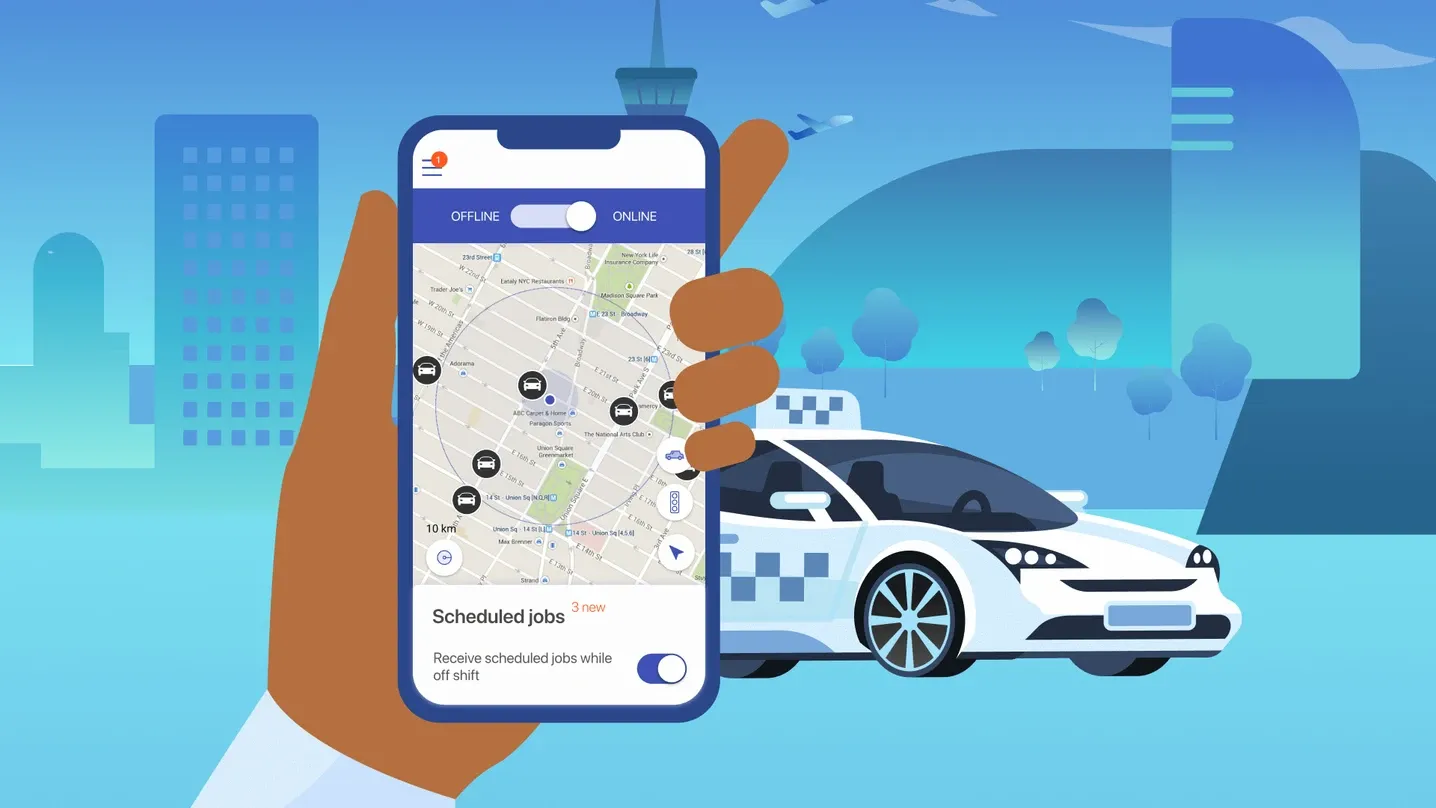
Through a dedicated driver interface, drivers can receive booking requests, review pick-up and destination information, accept or decline journeys and access navigation tools.
This reduces the need to switch between different applications or rely on manual communication with dispatchers.
Another important advantage is improved access to journey information. Drivers can review the details of an upcoming booking before starting the journey, helping them prepare and plan their route.
Some platforms also provide earnings summaries, journey histories and performance information. These features allow drivers to monitor their activity and understand how they are performing over time.
Mobile technology can also help drivers manage their availability. Depending on the platform, they may be able to indicate when they are ready to accept bookings, take a break or finish their working day.
For independent drivers and taxi operators, these tools can make daily operations more organised.
A well-designed driver application should be simple to navigate, reliable and easy to use while parked or between journeys. Safety must always remain a priority, and drivers should never be encouraged to interact with their phones while driving.
When implemented correctly, mobile applications can reduce unnecessary administrative work and allow drivers to concentrate on providing a good service.
6. Smarter Dispatching and More Efficient Fleet Management
Behind every successful taxi service is an effective dispatching system.
Traditionally, taxi dispatching involved operators receiving booking requests, identifying available vehicles and communicating instructions to drivers. Although this system can work, it becomes increasingly difficult to manage as the number of bookings and vehicles grows.
Mobile applications, supported by intelligent dispatching technology, can make this process considerably more efficient.
When a passenger requests a taxi, the platform can use information such as vehicle location, driver availability, distance and estimated travel time to identify suitable drivers.
Rather than manually contacting several drivers, the system can automatically distribute booking requests according to its dispatching rules.
This can reduce delays and improve the allocation of available vehicles.
For example, if several drivers are operating in different areas of a city, the dispatching system can identify which available driver is best positioned to collect a passenger. This may help reduce unnecessary travel and improve pick-up times.
Fleet management systems can also give taxi companies a broader understanding of their operations.
Managers may be able to monitor:
- The number of active vehicles.
- Driver availability.
- Completed and pending bookings.
- Vehicle locations.
- Journey durations.
- Peak booking periods.
- Operational performance.
Access to this information helps businesses make more informed decisions.
For instance, if booking data consistently shows increased demand around a particular transport station during evening hours, a taxi company may decide to make more vehicles available in that area.
Similarly, identifying periods of low demand can help operators plan driver schedules more effectively.
Automated dispatching does not eliminate the need for human oversight. Unusual requests, customer complaints and operational problems may still require intervention.
However, combining digital booking applications with intelligent dispatching systems can make taxi operations more organised, responsive and scalable.
7. Improving Passenger Safety and Trust
Passenger safety is one of the most important considerations in the taxi industry.
Customers want to know that they are travelling with a legitimate driver, entering the correct vehicle and using a service that takes their personal safety seriously.
Mobile applications can support these expectations by providing greater access to journey and driver information.
Before entering a taxi, passengers may be able to view details such as:
- The driver's name and profile.
- The vehicle's registration number.
- The vehicle's make and model.
- The driver's estimated arrival time.
- The booking reference.
Having this information readily available makes it easier to verify that the correct vehicle has arrived.
Some applications also include additional safety features, such as emergency assistance options, journey-sharing functions and access to customer support.
Journey-sharing is particularly useful for passengers travelling alone. By sharing a live trip link or journey details with a trusted contact, passengers can allow someone else to follow their progress.
In-app reporting systems can also help passengers raise concerns about inappropriate behaviour, vehicle conditions or service problems.
For taxi companies, digital records can support the investigation of complaints and provide a clearer record of booking activity.
Nevertheless, technology should complement rather than replace proper safety procedures. Driver background checks, vehicle inspections, licensing requirements and staff training remain essential.
Data protection is equally important. Taxi applications collect information about passengers, drivers and journeys, meaning businesses must take appropriate measures to protect personal information and comply with relevant privacy laws.
A taxi application that combines convenient features with responsible safety practices can help establish greater passenger confidence and strengthen the reputation of the business.
8. Personalised Services and Better Customer Experiences
Customer expectations are changing across almost every industry.
People increasingly expect services to recognise their preferences, remember useful information and offer convenient options without requiring them to repeat the same requests.
The taxi industry is no exception.
Mobile applications provide taxi companies with opportunities to create more personalised passenger experiences.
For example, applications may allow customers to save their favourite locations, such as home, work or frequently visited destinations. This makes repeat bookings quicker and reduces the possibility of entering an incorrect address.
Some platforms may also offer booking history, allowing passengers to review previous journeys and repeat a familiar route.
Additional preferences can further improve convenience. Depending on the application, passengers may be able to request specific vehicle categories, indicate accessibility requirements or select available journey options that suit their needs.
Personalisation can also be supported through customer loyalty programmes.
Taxi companies may introduce reward points, promotional discounts or special offers for frequent users. These incentives can encourage customers to continue using the same service rather than switching between competing platforms.
From a business perspective, customer feedback and booking patterns can help operators understand which services are most popular.
For example, if passengers frequently request larger vehicles for airport transfers, a company can use this information to review its vehicle availability.
However, personalisation should always be balanced with privacy. Customer information should only be collected and used for legitimate purposes, with appropriate transparency and security.
When used responsibly, mobile applications can help taxi companies move beyond basic transportation and create more convenient, customer-focused services.
9. Using Data and Analytics to Make Better Business Decisions
One of the most valuable benefits of digital taxi applications is the amount of operational information they can generate.
Every booking, completed journey, payment and customer interaction can provide useful insights into how a taxi business operates.
In a traditional taxi business, much of this information may be recorded manually or spread across different systems. This can make it difficult to identify patterns or measure performance accurately.
Digital platforms can bring this information together and present it in organised reports.
Taxi operators can use analytics to understand important business trends, including:
Customer demand: Booking information can reveal which areas generate the most requests and when demand is highest.
Driver performance: Journey completion rates, customer feedback and booking acceptance information can help managers understand operational performance.
Revenue patterns: Digital payment records and booking histories can help businesses review earnings across different periods.
Customer satisfaction: Ratings, reviews and complaints can highlight areas where services are performing well or need improvement.
Operational efficiency: Journey durations, vehicle movements and waiting times can help identify inefficiencies.
These insights allow taxi businesses to make decisions based on actual operational information rather than relying entirely on assumptions.
For example, if a company identifies that bookings regularly increase during Friday evenings, it can consider adjusting driver availability accordingly.
If customers frequently report long waiting times in a particular area, management can review vehicle distribution and dispatching practices.
Over time, this information can help businesses improve service quality, manage resources and identify opportunities for growth.
More advanced systems may also use artificial intelligence and predictive analytics to estimate future demand or identify patterns that would otherwise be difficult to detect.
However, data is only useful when it is accurate, relevant and interpreted correctly. Taxi companies should ensure that their systems produce reliable information and that access to business and customer data is properly controlled.
10. Supporting Sustainable and More Responsible Transport
Environmental sustainability has become an increasingly important issue for businesses across the transport sector.
Taxi companies face growing pressure to consider how their vehicles, routes and daily operations affect the environment.
Although mobile applications cannot eliminate the environmental impact of road transport, they can support more efficient operations.
One important contribution is route optimisation.
Navigation and GPS systems can help drivers identify suitable routes based on distance and available traffic information. Avoiding unnecessary detours can reduce wasted mileage, journey times and fuel consumption.
Digital dispatching can also help allocate vehicles more efficiently, potentially reducing the distance drivers travel to reach passengers.
In addition, better demand forecasting can help operators understand where vehicles are most likely to be needed. This may reduce unnecessary vehicle movement between bookings.
Mobile applications can also make it easier for taxi businesses to introduce and manage electric or hybrid vehicles.
For example, operators may be able to identify which vehicles are available for bookings, monitor their operational status and consider charging requirements when planning vehicle schedules.
Some platforms may also allow passengers to select electric vehicles where available.
These developments can support a gradual transition towards more environmentally responsible transport services.
However, sustainability depends on several factors, including vehicle technology, electricity sources, infrastructure and actual journey patterns.
Digital technology should therefore be viewed as one part of a wider sustainability strategy rather than a complete solution.
11. Helping Taxi Companies Compete in a Digital Marketplace
The taxi industry has become increasingly competitive.
Passengers have more transport options than ever before, including traditional taxi companies, ride-hailing platforms, public transport and private vehicle services.
In this environment, customer convenience and service quality can significantly influence which provider people choose.
Mobile applications allow established taxi companies to compete in a market where digital convenience has become an important expectation.
A company with its own well-designed booking application can maintain a direct relationship with passengers rather than relying exclusively on telephone bookings or third-party platforms.
This can provide several business advantages.
First, it creates a recognisable digital presence. Customers can access the company's services directly through their smartphones.
Second, it allows businesses to communicate with passengers through notifications, promotional offers and service updates.
Third, it provides greater control over the booking experience and the features offered to customers.
Fourth, it creates opportunities to build customer loyalty through booking histories, reward programmes and personalised services.
For smaller taxi companies, adopting digital technology can also help create a more professional and organised service without necessarily requiring the same infrastructure as a large transport company.
However, simply launching an application is not enough to guarantee success.
The application must be reliable, easy to use and supported by an effective driver network and customer service operation. A poorly designed application with frequent technical problems can damage customer confidence rather than improve it.
Taxi companies must therefore consider mobile technology as part of a wider business strategy.
The goal should not simply be to have an application, but to use it to provide a better service.
12. Challenges of Introducing Mobile Applications
Despite their advantages, mobile applications also introduce challenges that taxi companies must consider.
Understanding these challenges is important for businesses planning to modernise their operations.
Initial Development and Maintenance Costs
Developing a taxi application involves more than creating a simple booking interface.
A complete platform may require passenger and driver applications, a dispatching system, payment integration, GPS functionality, customer support tools and an administrative dashboard.
These systems must also be maintained and updated regularly.
For smaller operators, the initial investment can be a significant consideration. Businesses should therefore assess their requirements carefully and choose technology that suits their size and operational needs.
Digital Accessibility
Not every passenger or driver is equally comfortable using smartphone applications.
Some customers may prefer telephone bookings, while others may have older devices or limited access to mobile internet.
Taxi companies should avoid excluding these customers.
Maintaining alternative booking options can help ensure that digital modernisation improves accessibility rather than creating additional barriers.
Data Privacy and Cybersecurity
Taxi applications handle sensitive information, including names, telephone numbers, payment details and journey locations.
Protecting this information is essential.
Businesses should use secure systems, appropriate access controls and reliable payment providers. They must also comply with applicable data protection regulations, including the General Data Protection Regulation (GDPR) where relevant.
Customers should be informed about how their information is collected, processed and stored.
Technical Reliability
A taxi application needs to work consistently.
If the system experiences downtime, passengers may be unable to book journeys and drivers may lose access to important booking information.
Technical problems can also affect payment processing, navigation and communication.
Regular testing, maintenance and effective technical support are therefore essential.
Driver Training and Adoption
Introducing a new application may require drivers to change established working practices.
Some drivers may need assistance understanding how to accept bookings, use navigation tools or manage their availability.
Providing clear instructions and practical training can make the transition easier.
Successful digital transformation depends not only on the technology itself but also on the people using it.
13. The Future of Mobile Applications in the Taxi Industry
Mobile applications have already transformed many aspects of taxi operations, but technological developments suggest that further changes are likely.
As digital systems become more advanced, taxi companies may gain access to increasingly intelligent tools for managing passengers, drivers and vehicles.
One important development is artificial intelligence.
AI-powered systems can analyse historical booking information, traffic conditions and demand patterns to help taxi operators make more informed decisions.
For example, predictive systems may estimate when particular areas are likely to experience increased demand. This could help companies position available vehicles more effectively.
Another area of development is the integration of smart navigation and traffic information.
As navigation technology improves, taxi applications may become better at identifying suitable routes and responding to unexpected road conditions.
Electric vehicle integration is also likely to become more important. Applications could help operators manage charging schedules, monitor vehicle availability and make environmentally conscious vehicle options easier for passengers to select.
Accessibility is another area where future developments could make a difference.
More inclusive application designs, improved language support and additional accessibility features could help make taxi services easier to use for a wider range of passengers.
Furthermore, the integration of different transport services may create more connected travel experiences. Passengers could potentially use digital platforms to coordinate taxi journeys with public transport, airport transfers and other mobility options.
The future of the taxi industry will not be defined by one particular technology. Instead, it will depend on how effectively businesses combine different digital solutions to improve the overall transport experience.
Companies that remain open to innovation and continuously adapt to customer needs will be better positioned to respond to these changes.
Conclusion: A More Connected Future for the Taxi Industry
Mobile applications have become an essential part of the modern taxi industry. They have transformed the way passengers book journeys, communicate with drivers, make payments and access transport services.
For passengers, they provide greater convenience, transparency and control. For drivers, they offer tools that can simplify daily tasks and improve access to bookings. For taxi companies, they create opportunities to improve dispatching, manage fleets, analyse business performance and build stronger customer relationships.
However, modernising the taxi industry involves more than introducing new technology. Businesses must ensure that their applications are reliable, accessible and secure. They must also invest in driver support, customer service and the systems required to maintain an efficient operation.
Ultimately, the most successful taxi services will be those that use technology to make transportation simpler and more dependable.
As customer expectations continue to evolve, mobile applications will play an increasingly important role in shaping the future of urban mobility. Taxi companies that embrace digital innovation today can build more efficient operations and provide the convenient, connected experiences that modern passengers expect.
The future of the taxi industry is not just about getting passengers from one destination to another. It is about making every part of the journey smarter, easier and more reliable.
Add a taxi-app-specific call to actionReduce repetition across sections